Get Your Free Quotes on Tree Care Today!
Expert Tips for Safely Trimming Large Tree Branches Without Harming Your Property
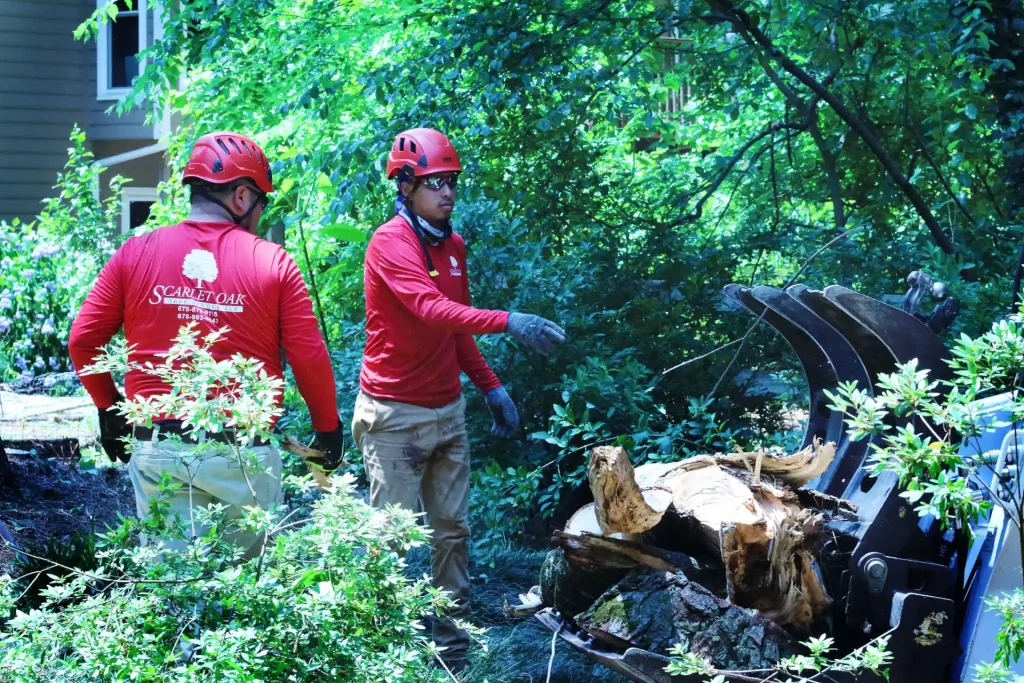
Master Large Branch Trimming Techniques in Canton, GA
Assess Tree Health and Branch Structure Before You Cut
Before making a single cut, walk around the tree and examine its overall health and structural integrity. Look for signs of disease such as discolored leaves, fungal growth on the bark, or areas where bark has peeled away to expose damaged wood. In Canton’s humid climate, fungal infections spread rapidly during warm months, so identifying diseased branches early prevents contamination of healthy tissue.
Study the branch collar, the swollen area where a branch meets the trunk or parent limb. This collar contains specialized cells that compartmentalize wounds and prevent decay from spreading into the main tree. Never cut flush with the trunk; preserving the branch collar is essential for proper healing. Georgia’s native oaks and pines have pronounced collars that make identification easier, while maples and sweetgums require closer inspection.
Evaluate the branch angle and attachment strength. Branches forming a wide, U-shaped angle with the trunk are structurally sound, while narrow V-shaped crotches create weak points prone to splitting under load. Large branches with co-dominant leaders (two trunks of similar size) pose significant risk and often require professional tree trimming services to address safely. Check for included bark, where bark grows between branch and trunk instead of forming a proper union; these attachments fail suddenly and should not be tackled without specialized equipment and training.
Gather the Right Tools and Safety Equipment
Attempting to trim large branches with inadequate tools creates dangerous situations and ragged cuts that invite disease. For branches up to three-quarters of an inch in diameter, bypass hand pruners deliver clean cuts that heal quickly. Bypass models cut like scissors, producing smooth edges, while anvil-style pruners crush tissue and should be avoided for living wood.
Branches between three-quarters of an inch and two inches require loppers with long handles for leverage. Choose models with telescoping handles to extend your reach without overextending your body position. For branches two to six inches thick, invest in a curved pruning saw with aggressive teeth designed for green wood. Straight-blade carpenter saws bind in living tissue and make the job exponentially harder.
Personal protective equipment is non-negotiable when performing tree pruning service work. A hard hat protects against falling branches and debris; even small twigs falling from height carry enough force to cause serious injury. Safety glasses with side shields guard against sawdust and bark fragments, which are especially problematic when cutting overhead. Heavy leather gloves prevent blisters and protect hands from rough bark and sharp edges. Steel-toed boots provide foot protection if a branch drops unexpectedly.
Never use a chainsaw while standing on a ladder. This combination accounts for a disproportionate number of serious injuries in residential tree work. If a branch requires a chainsaw and cannot be reached from the ground with a pole saw, the job has crossed into professional territory requiring fall protection systems and advanced rigging techniques offered through commercial tree service providers.
Execute the Three-Cut Method for Large Branches
The three-cut method prevents bark from tearing down the trunk when a heavy branch falls, a common mistake that creates large wounds vulnerable to decay and insect infestation. This technique distributes the branch’s weight in stages, maintaining control throughout the removal process.
Begin with the undercut, positioned 12 to 18 inches from the trunk on the underside of the branch. Saw upward through one-quarter to one-third of the branch diameter, then stop. This cut prevents the bark from peeling downward when the branch falls. North Georgia’s live oaks have particularly thick bark that tears extensively if this step is skipped, leaving wounds that take years to close.
Make the second cut two to three inches farther out from the undercut, sawing downward from the top of the branch. As you cut through, the branch’s weight will cause it to break cleanly between your two cuts, falling away without tearing bark. The undercut prevents the falling section from ripping wood fibers along the trunk. Control the branch’s fall direction by positioning your body and any helpers to guide it away from structures, power lines, and landscape features.
The third cut removes the remaining stub just outside the branch collar. Identify where the collar’s swelling ends and make your final cut at a slight angle following the collar’s natural line. Cutting too close removes the protective collar tissue; cutting too far out leaves a stub that dies back and rots. For branches over four inches in diameter, consider whether emergency tree cutting specialists should handle the work, particularly if the branch hangs over your roof, power lines, or high-traffic areas.
Time your cuts during Georgia’s dormant season when possible, typically late fall through early spring. Trimming during active growth in late spring and summer stresses trees already working hard in the heat. Exceptions include hazardous branch removal, which should never wait for an ideal season if the branch threatens property or safety.
Recognize When to Call a Professional Arborist
Certain situations demand professional intervention, regardless of your skill level or equipment access. Branches within 10 feet of power lines require specialized training and coordination with utility companies; contact with electrical lines causes fatal injuries every year. Any branch that would fall onto your home, garage, or vehicle during removal needs controlled rigging by trained professionals who can lower sections safely using ropes and pulleys.
Trees showing signs of internal decay, such as hollow-sounding trunks, conks (shelf-like fungal growths), or extensive carpenter ant activity, may fail unpredictably when weight distribution changes. Removing even a single large branch from a compromised tree can shift the center of gravity enough to cause catastrophic failure. Professional tree removal services have the diagnostic tools and structural knowledge to assess these risks accurately.
Branches exceeding eight inches in diameter or requiring cuts more than 15 feet above ground cross the threshold into work requiring fall protection systems, advanced rigging, and liability insurance. Homeowner’s insurance policies typically exclude coverage for injuries sustained during tree work beyond basic ground-level pruning. The cost of professional tree trimming services is modest compared to medical bills, property damage, or legal liability if something goes wrong.
In Canton and surrounding North Georgia communities, mature hardwoods often develop co-dominant leaders that need structural correction through cabling and bracing rather than simple removal. Licensed arborists can install support systems that preserve the tree’s canopy while reducing failure risk, an option unavailable through DIY methods. When tree health is questionable or the work involves significant risk, professional assessment provides clarity and often saves money by addressing the right problem correctly the first time.
Care for Cuts and Protect Your Landscape Afterward
Modern arboricultural science has disproven the old practice of painting or sealing pruning cuts. Trees compartmentalize wounds naturally by forming callus tissue around the cut edge, and wound dressings actually trap moisture against the wood, promoting decay rather than preventing it. Leave cuts exposed to air and allow the tree’s natural defenses to work.
Remove all cut branches and debris from around the tree’s base. Piled branches create habitat for wood-boring insects and fungal spores that can migrate into fresh cuts. In Georgia’s humid climate, decomposing wood near the tree becomes a disease vector within weeks. Consider running branches through a chipper for mulch, or arrange for stump grinding service providers to handle larger debris as part of broader landscaping services.
Monitor the pruning sites over the following growing season. Healthy trees begin forming callus tissue within weeks of proper cuts made during dormant periods. Cuts that weep sap excessively, develop fungal growth, or fail to show callus development by the next growing season indicate problems requiring professional evaluation. Water the tree deeply during dry periods following major pruning to support the energy demands of wound closure and new growth.
Document your work with photos showing cut locations and techniques used. This record helps you track healing progress and provides valuable information if you later need to consult with tree services Georgia professionals about the tree’s ongoing health. Proper technique today prevents costly tree removal services tomorrow and preserves the landscape value and environmental benefits your trees provide for decades to come.